
There has been some discussion regarding the use of
Vitaminwater at NCAA sponsored Championship events. The concern is that some of the products in this line contain substances that appear on the NCAA banned substance list or are considered non-permissible substances. Read below to answer some of your questions regarding these popular products used for fluid replacement.
Vitaminwater Frequently Asked Questions
What is Vitaminwater?
Vitaminwater is an electrolyte and nutrient enhanced water.
Which variety will be part of NCAA championships?
Vitaminwater Revive will be the only flavor associated with NCAA championships.
Are there other Vitaminwater varieties affiliated with this partnership between Coca-Cola and the NCAA?
Vitaminwater Revive will be the only variety directly affiliated with the partnership. The other eight varieties of Vitaminwater (out of a total of 15 flavors) that contain nutrients permissible by NCAA bylaws will be available to schools, athletics staff and student-athletes on a by-request basis.
Every bottle of Vitaminwater has at a minimum:
· 25% of four b vitamins
· 100% of vitamin c for most products
· calcium, magnesium and potassium electrolytes
· 32 g of sugar
How will Vitaminwater Revive be incorporated into NCAA championships? Vitaminwater Revive will have sideline presence at NCAA championships in the way of coolers, cups, water bottles and related items.
Vitaminwater Revive will be added as an additional hydration option for all NCAA championships. Other Coca-Cola products will be available, including Smartwater and POWERade.
The entire line of Vitaminwater products (all 15 flavors) may appear in retail displays next to NCAA championship themed promotions, but there will be no direct association between the impermissible 6 flavors and the NCAA. There also will be a visible disclaimer in those situations.
Vitaminwater will promote its NCAA relationship and activation through television, print and other media during and around selected championships.
Does the sideline presence of Vitaminwater Revive mean that the NCAA is now endorsing a supplement drink product? No. The NCAA does not endorse commercial products/services, including nutritional supplements. The NCAA has reviewed the list of ingredients on the bottle labels per NCAA Bylaw 16.5.2.g and found that NCAA institutions may provide the following nine Vitaminwater products to their student-athletes:
· Revive – fruit punch 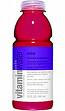
· Essential – orange-orange
· XXX – acai, blueberry, pomegranate
· Focus – kiwi strawberry
· Formula 50 – grape
· Multi-v – lemonade
· Charge – lemon-line
· Endurance – peach-mango
· Defense – raspberry-apple
Since there are Vitaminwater products that contain banned or impermissible substances as defined by the NCAA, how can NCAA institutions determine which vitaminwater varieties or other hydration beverages may be provided?
If an institution has an interest in providing Vitaminwater, or any other supplement product, it is the institution's responsibility to review each product independently or contact NCAA membership services for any questions related to NCAA Bylaw 16.5.2.g.
What impermissible ingredients per NCAA Bylaw 16.5.2.g might be found in Vitaminwater varieties?
Taurine, L-theanine, green tea extract, or glucosamine.
What NCAA banned substances might be found in Vitaminwater varieties?
Caffeine or guarana seed extract.
The NCAA bans caffeine because it is found to be a performance enhancer, and because of concern about the effects of stimulant use during intense exercise. Caffeine will produce an NCAA positive drug test if amounts exceed 15 micrograms/mL in the urine sample collected. There is not a formula to calculate the amount of caffeine one can consume prior to a drug test and not test positive. Varying metabolic rates and time of consumption prior to urine collection are among the contributing factors. The 15 micrograms/mL cut-off is designed to allow for moderate caffeine consumption below the positive test threshold. The NCAA recommendation is not to consume caffeine in a supplement form.
What is the difference between impermissible and banned substances according to NCAA Bylaws?
Impermissible nutritional supplement products are those that contain ingredients that do not meet the criteria identified in NCAA Division I Bylaw 16.5.2.g, and Division II Bylaw 16.5.1.h which define what kinds of nutritional supplement products institutions may provide to student-athletes to assist them in calorie and fluid replacement. Student-athletes may purchase a nutritional supplement that contains impermissible substances, provided it does not contain an NCAA banned substance.
Student-athletes may not use substances that are Banned by the NCAA, at any time, unless for legitimate medical purposes. The classes of banned-drugs are defined in NCAA Bylaw 31.2.3.4.
Some supplement products may contain both impermissible supplement ingredients and banned substances.
Which Vitaminwater products contain impermissible or banned substances?
At this time, Vitaminwater has six products that contain impermissible or banned substances. Those products are Power-C, Energy, B-Relaxed, Rescue, Vital-T and Balance.
Power-C (Drangonfruit) Impermissible Substance is Taurine
b-Relaxed (Jackfruit-Guava) Impermissible Substance is L-Theanine
Vital-T (Lemon tea-Rooibos) Impermissible Substance is Rooibos Tea Extract
Balance (Cran-Grapefruit) Impermissible Substance is Glucosamine
Energy (Tropical Fruit) Banned Substances are Caffeine and Guarana Seed Extract
Rescue (Green Tea) Banned Substance is Caffeine
What is the “center for responsible hydration” as noted on the Vitaminwater Revive product label?
This reference is simply a moniker glacéau uses for marketing purposes.
Have the ingredients in Vitaminwater Revive changed over the years?
Yes. Vitaminwater Revive contained kola and ginseng nearly three years ago (2006). Those ingredients have since been removed and all nutritional facts are currently published on the product bottle.
Will Smartwater, another Glacéau product line, be offered as a bottled water hydration option at NCAA championships instead of Dasani?
Coca-Cola will provide bottled water for all 88 NCAA championships, whether it is Smartwater or Dasani.
Information provided by Mary Wilfert on behalf of the NCAA.

 It doesn't matter if calories come from carbohydrates, protein or fat -- eating less of them leads to weight loss, U.S. researchers said.


